
.JPG)
A roof edge is not the end of the story.
DOE’s Building America Solution Center describes gutters as channels along the roof edge that collect runoff, and downspouts as the components that carry collected water toward ground level. It also emphasizes conducting roof runoff away from the building rather than treating collection alone as the goal.
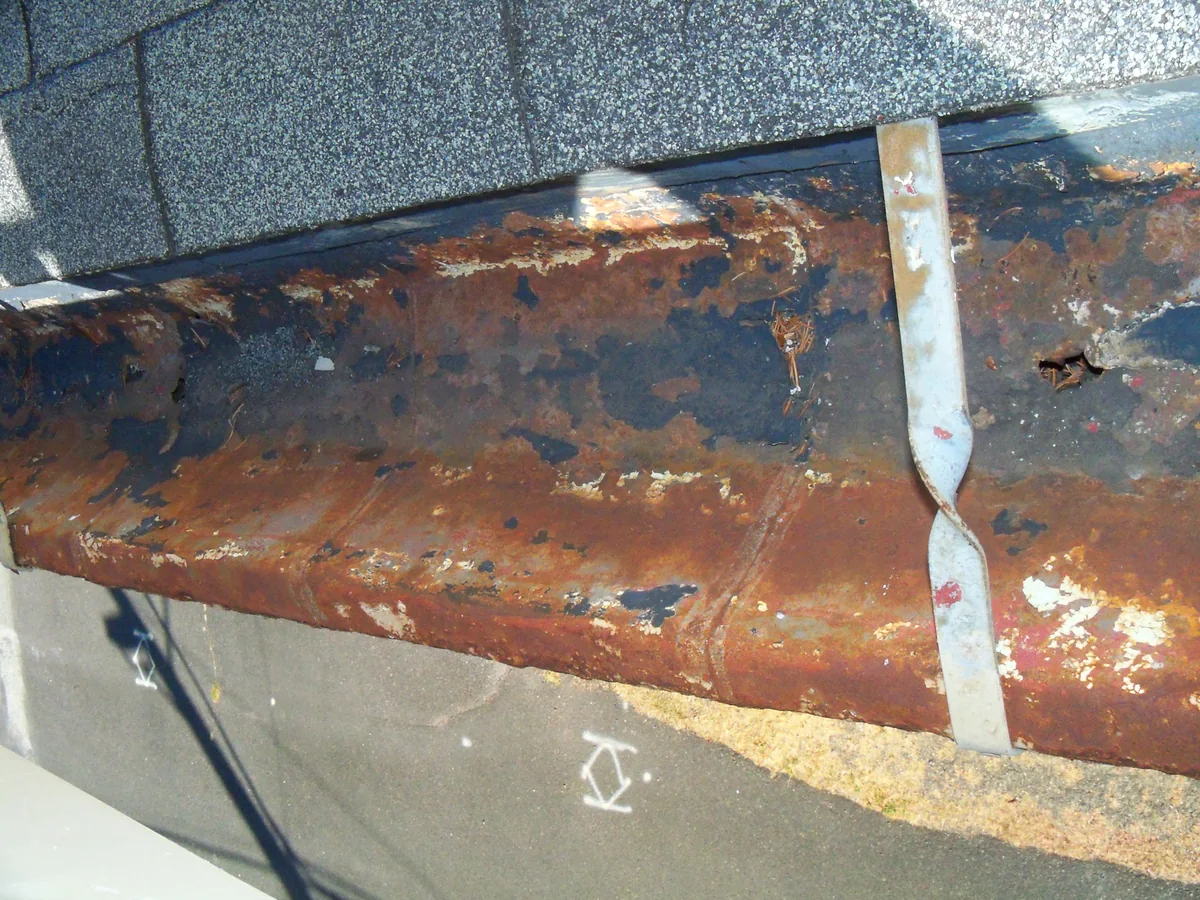
That makes the destination of the water part of the conversation. A gutter photograph can show a component, but not how a whole property drains. The guide’s historic rusted gutter is a clearly identified example of an existing roof-edge element, not a diagnosis of your home or a model for new work.
Background: DOE Building America: Gutters and Downspouts
Look at relationships, not isolated parts.
The Building America guide discusses flashing, overhangs, gutters, downspouts and drainage planes as a connected exterior water-management approach. It also points to roof-wall intersections as places where runoff and wall protection need to be considered together.
For a homeowner conversation, the useful question is “How does water move through this part of the design?” It is more informative than asking only whether a gutter or a piece of flashing is present. This page intentionally omits installation dimensions, fastening instructions and code-compliance rules.
Background: DOE Building America: Gutters and Downspouts
Four places to ask about.
- The roof surface and edges
- What route is water intended to take before it reaches the edge, and which edge details are part of the proposed work?
- Roof-to-wall intersections
- How are those transitions addressed as part of the connected exterior system?
- Collection and downspouts
- Who evaluates the appropriate collection approach and capacity for the building and local conditions?
- The discharge point
- Where will collected water go, and who evaluates the site beyond the downspout?
Local conditions matter.
The Building America guide includes climate-specific considerations and notes that roof runoff approaches differ with conditions. It does not support a one-size-fits-all gutter choice for every building. Its professional installation and compliance detail should not be mistaken for a simple homeowner repair recipe.
If you already have a concern, describe it to a qualified local professional without trying to reproduce a technical detail from this guide. You can ask which part of the system needs assessment and whether someone with a different specialty should be involved. We do not determine the cause of a leak, evaluate ground conditions or recommend drainage alterations.
Background: DOE Building America: Gutters and Downspouts
Keep useful notes without becoming an inspector.
For a conversation, write down the question you want answered, the location you mean and any existing documents you can discuss. Let the professional establish an appropriate assessment method. Do not climb onto a roof or use this page as instructions for opening, clearing or repairing a component.
The aim is a shared vocabulary: collection, transition and discharge. Return to the roof-system chapter if you want to understand how those interfaces fit the broader assembly, or use the printable questions page to organize the discussion.