
.JPG)
An assembly, not a single product.
The DOE describes roof systems as one or more material layers. NRCA’s homeowner-publication discussion names substrate surfaces, underlayment, drip edge, fasteners, shingles and flashings as distinct elements considered in asphalt-shingle quality control. That distinction is a useful starting point even if your goal is simply to understand an estimate.
A product name describes less than the whole roof. Ask a professional which existing components are part of the proposed work, which would remain and which need assessment before the scope can be settled. A clear explanation should distinguish the chosen surface from the surrounding assembly.
Background: DOE Guidelines for Selecting Cool Roofs (July 2010 PDF) · NRCA Guidance for homeowners (October 2020 article PDF)
Put unfamiliar terms on the question list.
You do not need to become an installer to ask what a term means. Treat the following as conversation categories, not a construction sequence or a specification. Different roof systems and buildings call for different details.
- Substrate or deck
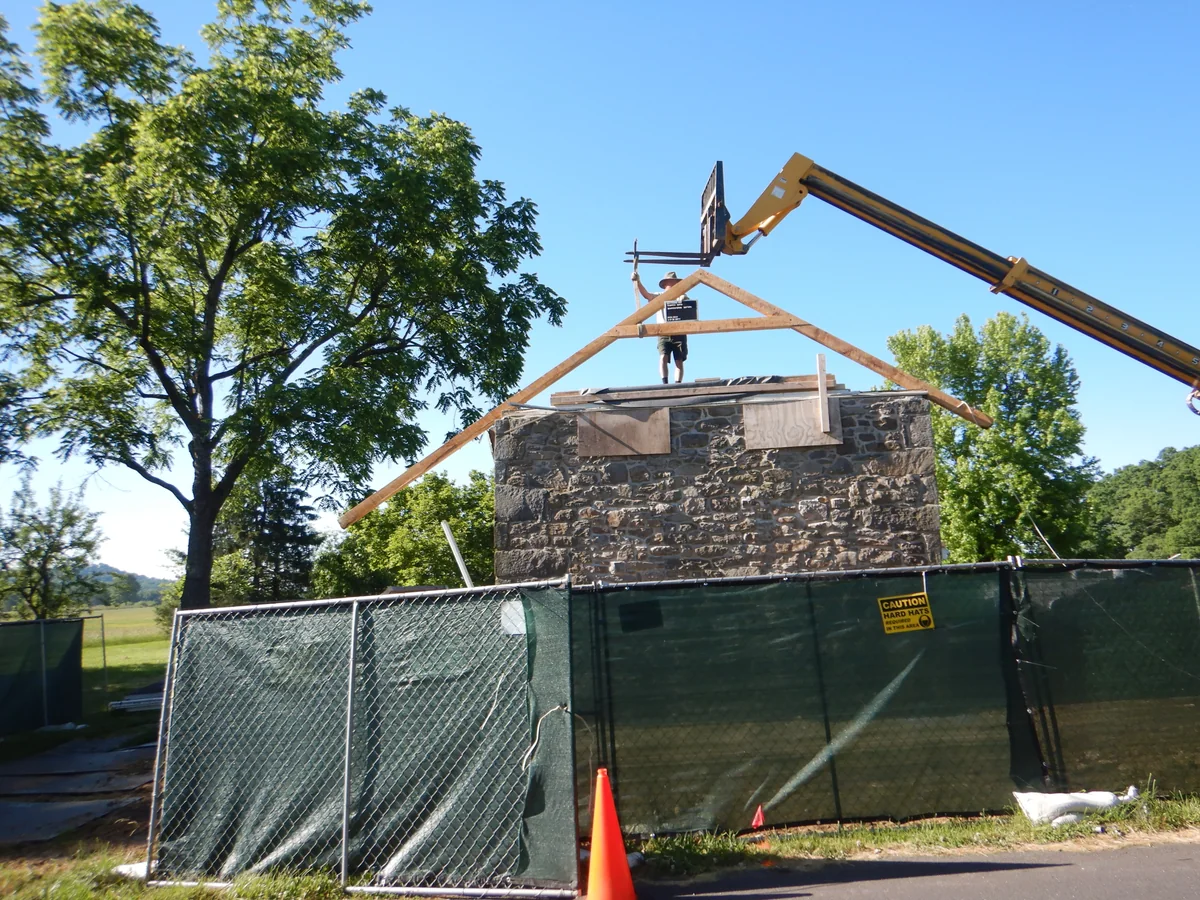
- Ask what surface supports the roofing and how its condition will be assessed. The historic framing photograph is an example, not a diagram of your home.
- Underlayment
- Ask which layer is being discussed beneath the outer surface and how it fits the proposed system.
- Flashing and edge details
- Ask how the proposal addresses places where the roof meets an edge, wall or other interruption.
- Fasteners and attachments
- Ask who is responsible for selecting and checking the attachment approach for the actual products and building.
Background: NRCA Guidance for homeowners (October 2020 article PDF) · DOE Building America: Gutters and Downspouts
The roof also belongs to a building.
The DOE cool-roof guide explains that thermal insulation reduces heat gains and losses in ways a reflective roof surface cannot. A cool surface and insulation therefore address different parts of a building conversation; one should not be treated as a complete substitute for the other.
NRCA’s homeowner guidance also discusses attic ventilation as part of understanding roof systems. This guide does not prescribe ventilation or insulation changes. Ask the professional which building conditions should be considered together and who is qualified to evaluate them.
Background: DOE Guidelines for Selecting Cool Roofs (July 2010 PDF) · NRCA Guidance for homeowners (October 2020 article PDF)
Understand the scope before comparing descriptions.
Two proposals can use the same material name and still describe different work. A useful reading habit is to underline the components each proposal names, then note which parts are not explained. Turn those gaps into questions rather than assuming they are included or omitted.
For example, “new shingles” tells you a surface category. It does not, by itself, explain how the substrate, underlayment, roof edges or wall intersections will be handled. Ask for a plain-language description and supporting product information. This is an editorial reading method, not an assessment of a contractor or a contract.
Leave assessment and roof access to professionals.
This page is not a roof inspection checklist, installation guide or repair instruction. It does not ask you to climb, lift materials or enter an unsafe space. NRCA encourages professional help when homeowners are not comfortable with inspections or maintenance.
Use the question sheet to prepare a conversation. Project-specific condition, structural suitability, compliance and installation decisions need qualified local evaluation, not a general web guide.
Background: NRCA Guidance for homeowners (October 2020 article PDF)